A quick disclaimer: This post is more philosophical than technical, but I definitely won’t shy away from nerding out about the gear. Skip over anything that bores you. These blogs have headers for a reason.
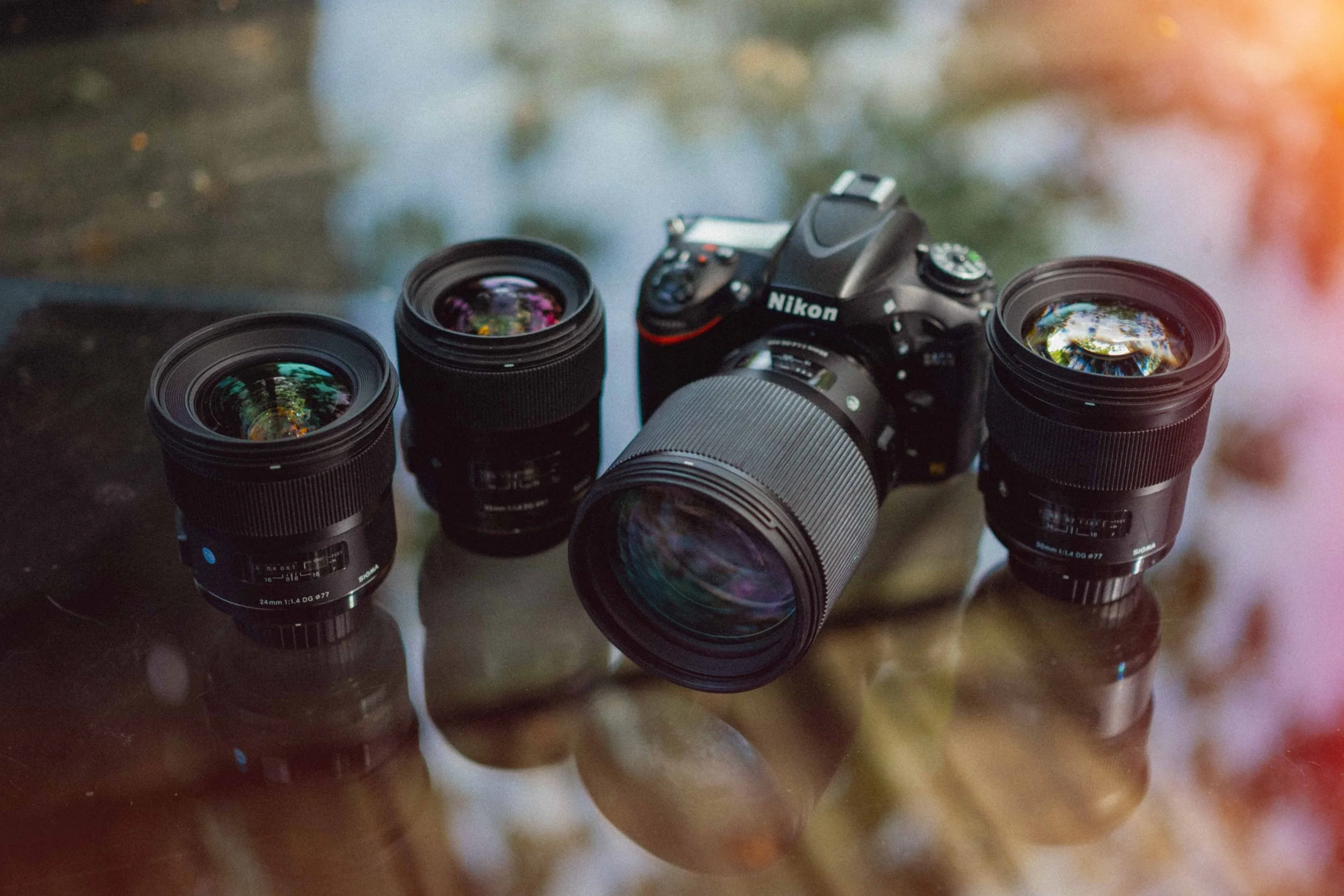
I’ve been a photographer since 2008 when I got my first DSLR (an Olympus E-510!). I was shooting on my high school’s Nikon D90s prior to that, but finally made the jump on my own.
I remember vividly the feeling that everywhere around me were incredible photos just waiting to be found: almost like a scavenger hunt you do with a lens over one eye. This is long before the days of Instagram, the algorithm, or even much else social online. I loved the joy of snapping something that shocked even me at how good it looked.
Fast forward a decade and I’ve now been a professional wedding photographer for a number of years: entirely bought into the Nikon ecosystem. By the time I retired from shooting professionally, I’d amassed a Z6, Z6ii, D750 (2x), D600, and D7000 (2x). Knowing gear depreciates in value almost as quickly as a used car, I sold all of that off after my last wedding (save for the D600 which I couldn’t move for a price I was happy with). I went all-in on Fuji.
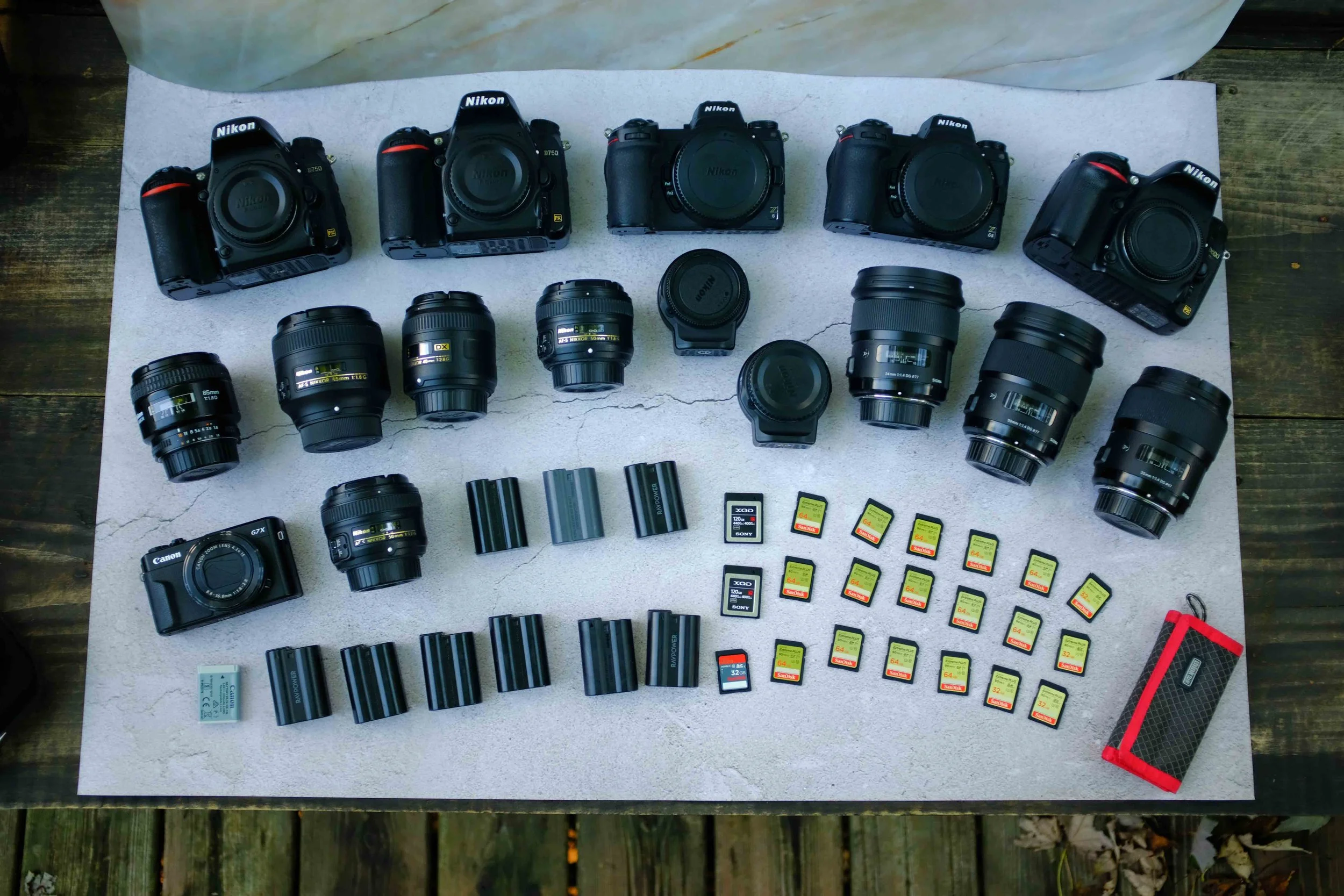
This was (just some of) the gear I offloaded after shooting my last weddings. Little did I know that D600 in the top right corner was going to stick around.
I remember vividly: On a Miami Beach / Cruise vacation that Leanne and I took, I left my Nikon gear in my camera bag the whole trip and shot the whole week on my Fuji x100F and our iPhones. (Sidenote: I’d also owned the x100T for a year and sold it… waited a year of regretting it, then bought back a used x100F when the time was right. That’s another story though. I’m identifying a trend.)
Tools that Inspire You to Create
To both:
Expand on why I only shot my Fujis on that Miami Beach trip, and
Give the first of a few reasons why I returned to Nikon,
I want to talk about the tools we use to create.
Photography is a great hobby for gearheads. If you love researching the latest and greatest, if you love technical data, if you enjoy long lists of specifications and obsessing over details that… don’t matter in the real world, then photography is a great candidate for your consideration. There’s a term for it in the community: G.A.S. Gear Acquisition Syndrome. Loosely defined as the desire to have more and more gear, believing it will make you better, all the while neglecting the gear you already have.
I’m not saying I’m immune to GAS, and I am not here to justify its validity. But there is some validity. We can chew the meat and spit out the bones a bit.
I used to be fully bought into the belief that “gear doesn’t matter.” What I’ve come to realize is that most of the people that say that are dudes that have spent entire careers with the best of the best and have skills that far outweigh the tools they use. Gear may not matter to them, and there’s a degree to which it’s true that gear definitely doesn’t matter to your client, but gear absolutely matters if your primary goal is to enjoy the creative process.
That’s what returning to Nikon means for me here. But to understand why Nikon is such a joy to create with, you’ve got to understand a little more about the lenses, because it’s really all about the lenses.
Date the Bodies, Marry the Lenses
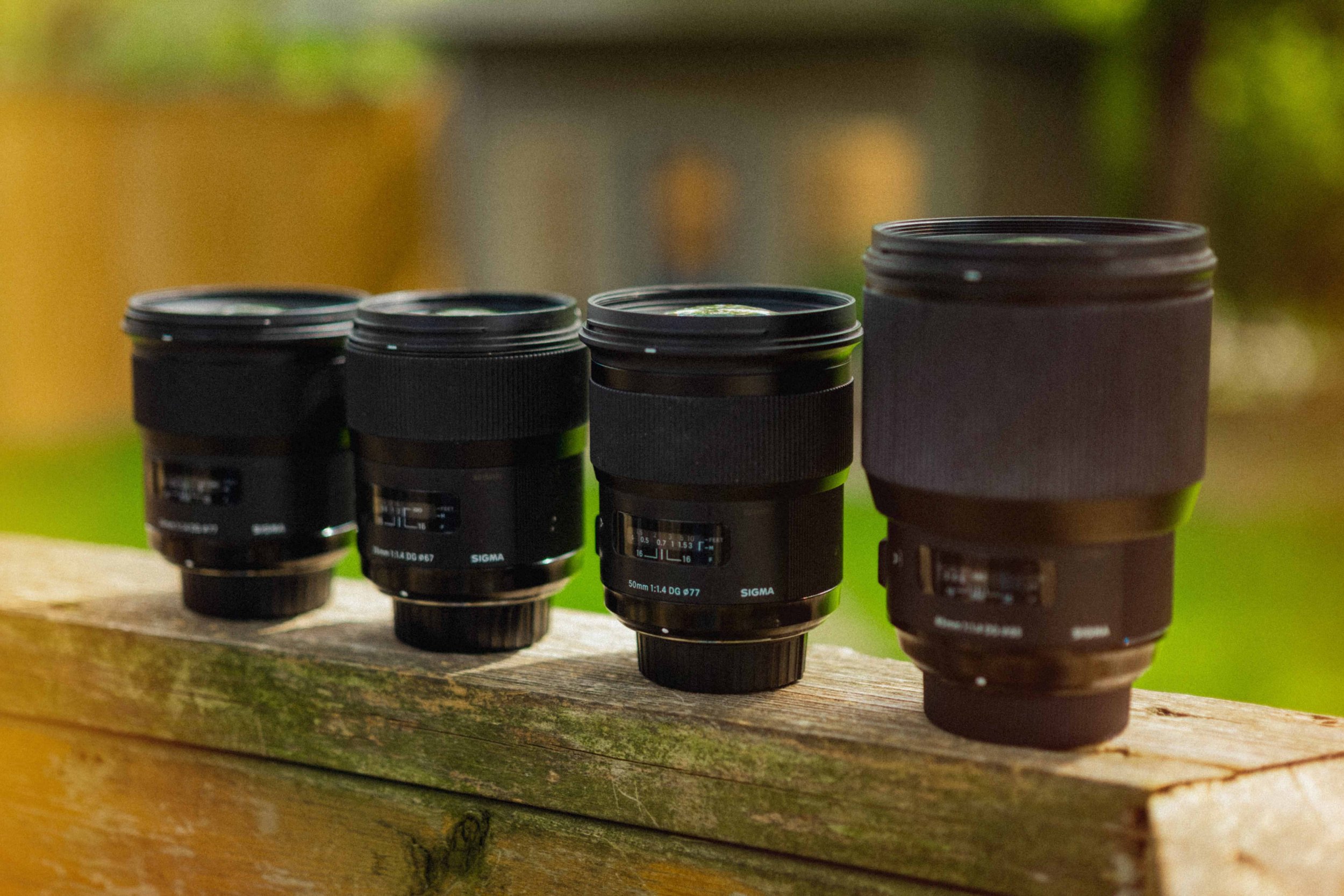
Sigma Art Series Lenses: 24mm, 35mm, 50mm, and 85mm
Old school photographers (Zack Arias was the guy I heard it from) have another saying about gear: Date the bodies, but marry the lenses. Meaning: The camera bodies will develop in technology fast. You want to upgrade them when the time is right. But the lenses will be something you bond with, you should really get to know and spend a lifetime with. There’s value in “limiting” yourself to a select set of lenses (or single lens, for some photographers) and master it.
Back in the day, the Sigma Art Series lenses were the best of the best. Before mirrorless cameras dominated the market and DSLRs were the top of the line, you could hardly do better than Sigma Art lenses. Sigma used to be known for cheap crap, but their Art series lenses were a turning point: they outperformed native manufacturer’s lenses. They weren’t inexpensive, and they weren’t toys. These were incredible tools of the trade.
Naturally, I coveted these lenses. I started with the 24mm (if I’m not mistaken) — bought used from a photographer named Taylor Jackson (absolutely massive online). I think we ended up with the 35mm after that. That was when I really fell in love with that focal length (it’s my desert island focal length, which is also probably why the Fuji x100 series is such a great fit for me). The 50mm I pined for for years and years, but I couldn’t justify the financial investment when the $300 50mm 1.8 was so good for the price. Finally though, we got it. Then, we happened upon the 85mm as well at one point but sold it after a month because that thing is monstrously heavy. (It’s an 86mm front filter thread, for any photographers reading this far.)
Why These Lenses Are so Magical
I don’t know lol. That’s why we call it magic: because it does something that shouldn’t seem to be possible but somehow appears before your eyes anyways.
Sigma lenses really were like magic to me. Combined with a full frame sensor (something Fuji willingly chooses not to have), that combination of lens + sensor is something that is, to me as a photographer, other-worldly. The rendering of the out-of-focus elements, the shallow (breathtaking!) 1.4 aperture, the insane depth of the subject in your image when you nail the focus: it’s like nothing else.
I’ve never done drugs so I’ve never been high, but I would have to imagine that there is some similarity in the feeling. As an artist, creating something that makes me think “Holy crap. I can’t believe I’m the one that made that.” is pretty much the feeling all artists pursue, in my opinion.
Nothing gives me that feeling quite like Sigma lenses do. Which is why selling them off was something I knew I might regret one day.
The Role of Sensor Size in Photography
I’m not teaching a course here so I’m not going to spend hours explaining all the nuance of sensor size and how it impacts the photographic image. I’ll just to to the chase of what you need to know:
35mm film — the kind you loaded up into the back of a camera in the 90s to shoot with; the very same kind used in disposable cameras and the like — created 35mm sensors in digital cameras. When digital cameras were first being created, it’s my understanding that they used APS-C sized sensors (otherwise known as “crop sensors”). These are 1.5x smaller than a traditional full frame (35mm) camera sensor.
In simpler terms:
Crop Sensor: Means less depth of field in your image. Less depth of field means your background is more in focus. A more in focus background means less separation of your subject and that which is around them. We don’t want to advocate for lazy compositions, but recognize that a crop sensor camera is not going to give you the effect of isolating your subject from the world around them. If that’s what you want, you need full frame.
Full Frame Sensor: Best for images that really bring a depth to your image. Particularly useful in portraiture, shooting at a shallow depth of field (meaning: lots of blurry stuff in your photos) helps lead your eye to the subject. Harnessed by a skillful photographer, this is a phenomenal technique for eye-catching imagery. Like all techniques: this can be abused (it can lead photographers to forgetting about photography fundamentals like lighting and composition), but if it’s the look you’re going for, no crop sensor camera can replicate it.
What you need to know about the camera systems in contention here:
Nikons are full frames (at least the cameras I shot. They have crop sensors too). The Sigma Art series lenses take full advantage of that full frame sensor and the depth of field it can make. Because I primarily like shooting people, this combination is a match made in heaven for me.
Fujifilms are crop sensors (excusing the Fuji GFX system which calls itself “medium format” but doesn’t even reach 645 standards; the smallest of medium format aspect ratios). What Fuji trades off in sensor size it attempts to make up for in colour rendering and film simulations (more on this in a bit). I thought this would be enough for me after a while. I never got there.
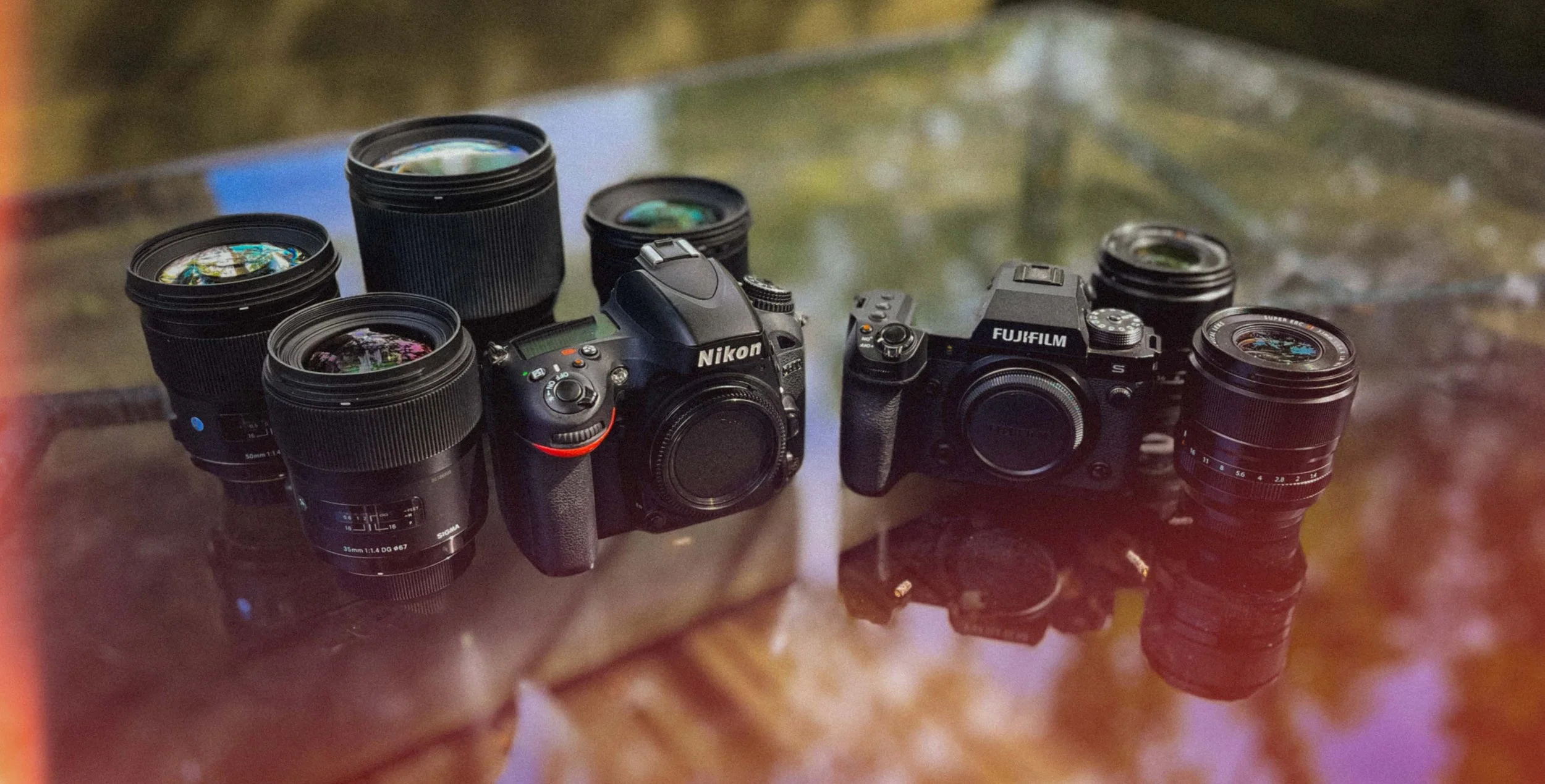
My Nikon kit on the left, and my Fuji system on the right.
Rekindling an Old Flame
For the better part of the past 2 years, I’ve had casual conversations with my wife to say that one day I’ll return to full-frame photography (meaning Nikon). I spoke about the Sigma lenses and we both understood (Leanne having been the other half of my wedding photography business) the incredible nature of those lenses.
Once a month (at least) for the 4 years I shot exclusively Fuji, I dreamt of one lens more than the others: The Sigma 24mm Art lens. A “wide angle” beast (not really wide angle), it was hard to tame. 24mm is not ideal for most portraits. But if you could find the right concoction of light, composition, subject, there was nothing like what that lens could do.
Here are just a handful of images from this past weekend to get my point across:



Are these the most incredible photos I’ve ever taken? No! But they represent a special kind of lightning-in-a-bottle for me that gets my blood flowing just thinking about it.
Time to Pull the Trigger
After a long time talking about it, Leanne and I decided it was the right time to pull the trigger on buying back all of those lenses on the used market. Here’s the thing:
Mirrorless cameras have swept the market. DSLRs are dying (dead!), and their native lenses are slowly going along with it. We have adapters that take old lenses and make them work on new cameras, but for most people as time goes on, they’ll skip the middle man and go straight for optically-superior lenses they can buy brand new from the manufacturer of their camera.
These lenses aren’t being manufactured anymore. What’s out on the market is all that will ever be again. Like my typewriters of yore, there will never be brand new versions of these products to hit store shelves again. As time passes and these lenses become harder to find, the difficulty in me owning them again becomes greater.
What’s great for me, though, is that dying technologies mean depreciations in value (remember how that hurt me earlier in this story? Now it benefits me).
10 years ago, these lenses would’ve cost nearly $1,000 CAD new a piece. Some of them even $1,500 without breaking a sweat. On the used market today? Let’s just say I spent between $450 and $550 (cash!) per lens. That’s an insane savings when you consider their optical quality relative to that price.
So what’s the real price to pay? These lenses only work on old Nikon full frame cameras (natively).
What’s the benefit of evolving technology? These lenses will also work on modern Nikon mirrorless cameras with an adapter. And — because of their design (and modern tech) — they will work better on modern cameras than they ever did on the DSLRs I shot these on in their prime.
One problem: I don’t have a Nikon mirrorless camera anymore (I sold it off, remember?).
All I have is an old Nikon D600; a camera disowned by its parent company.
(Re)Enter: The Nikon D600
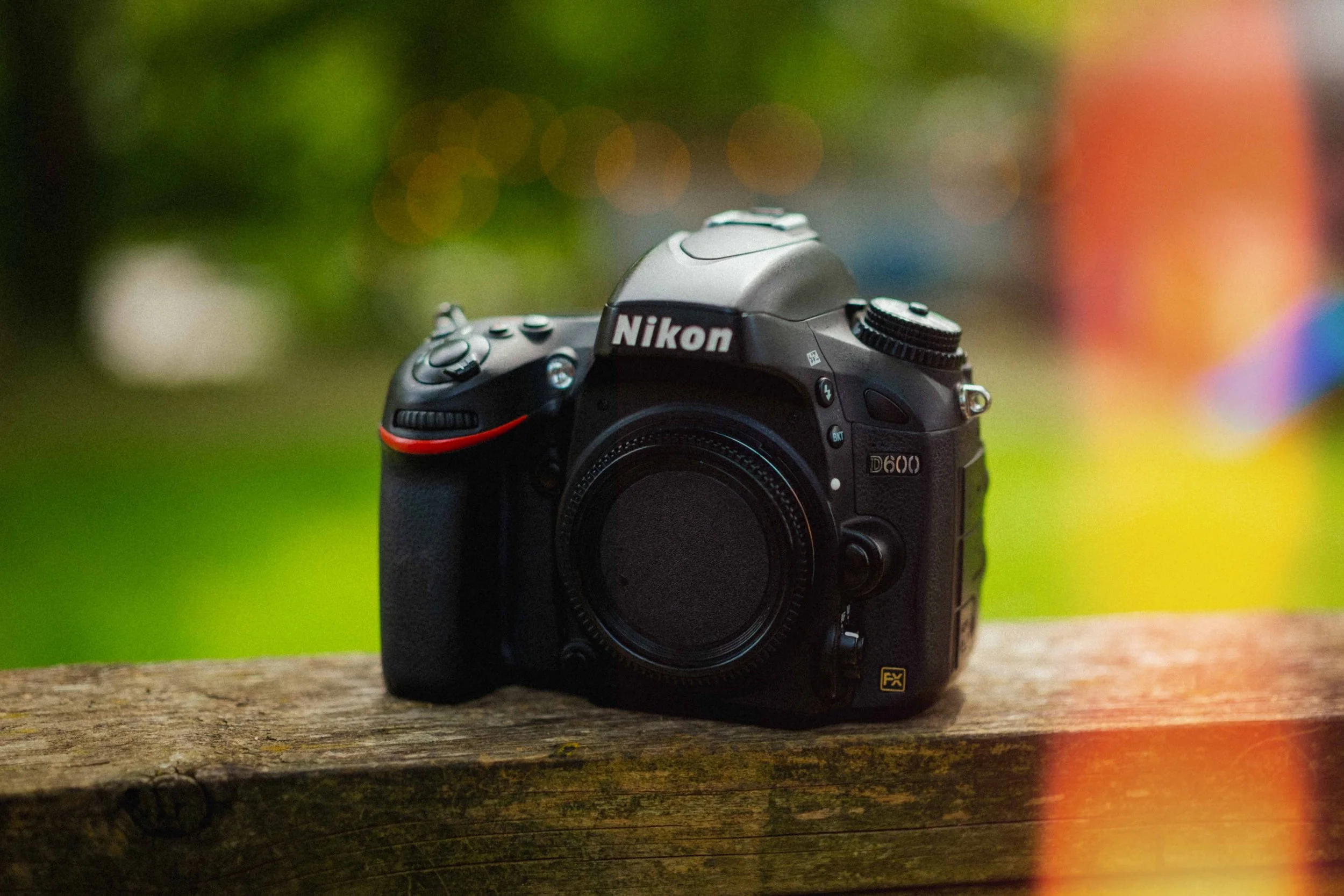
This camera was hated because it was plagued by a faulty shutter system that spat oil onto the camera lens every once in a while. Fair enough: cameras shouldn’t do that. But if you clean the sensor periodically, you can get around this without an issue. Nikon faced sharp criticism shortly after this camera was launched: initially denying any issues and then upgrading the camera to the D610 (identical in every way, save for the corrected shutter mechanism). They also offered free shutter replacements to any D600 owners (me!) who wanted to mail in their camera. I can’t imagine what this cost them in the end, but for someone like me who never minded the controversy, this was an easy win.
There’s a lot not to like about this camera. It was never as good as its big brother the Nikon D750 (of which we owned 2; incredible cameras that I built my business on), but optically you could not tell the difference in the editing room. The biggest challenge of this camera was its clustered autofocus points which primarily occupied the centre of the frame. Unideal for anyone who doesn’t shoot-and-recompose like I do. But as my 2nd camera body / backup camera, this didn’t bother me at all when shooting.
So… after buying back all of the Sigma Art lenses, this Nikon D600 — which I couldn’t offload on Kijiji for any reasonable price, so it sat in my closet for months (if not years) collecting dust — has been given a second life as my primary camera body for the foreseeable future.
One Day: Buying the Nikon Z6iii
I don’t know when (maybe not that long from now after all, but who knows), I’ll swap out the Nikon D600 with the Nikon Z6iii. I owned the 2 iterations prior to that, and they were phenomenal cameras. The V3 offers wildly improved video specs, which has become something very important to me.
Among the many reasons I’m happy not to have to sell my Fuji XH2S and lenses to buy back into the Nikon system, having 2 camera bodies that do well with both photo and video (even if I have my visual preferences) is really nice peace-of-mind.
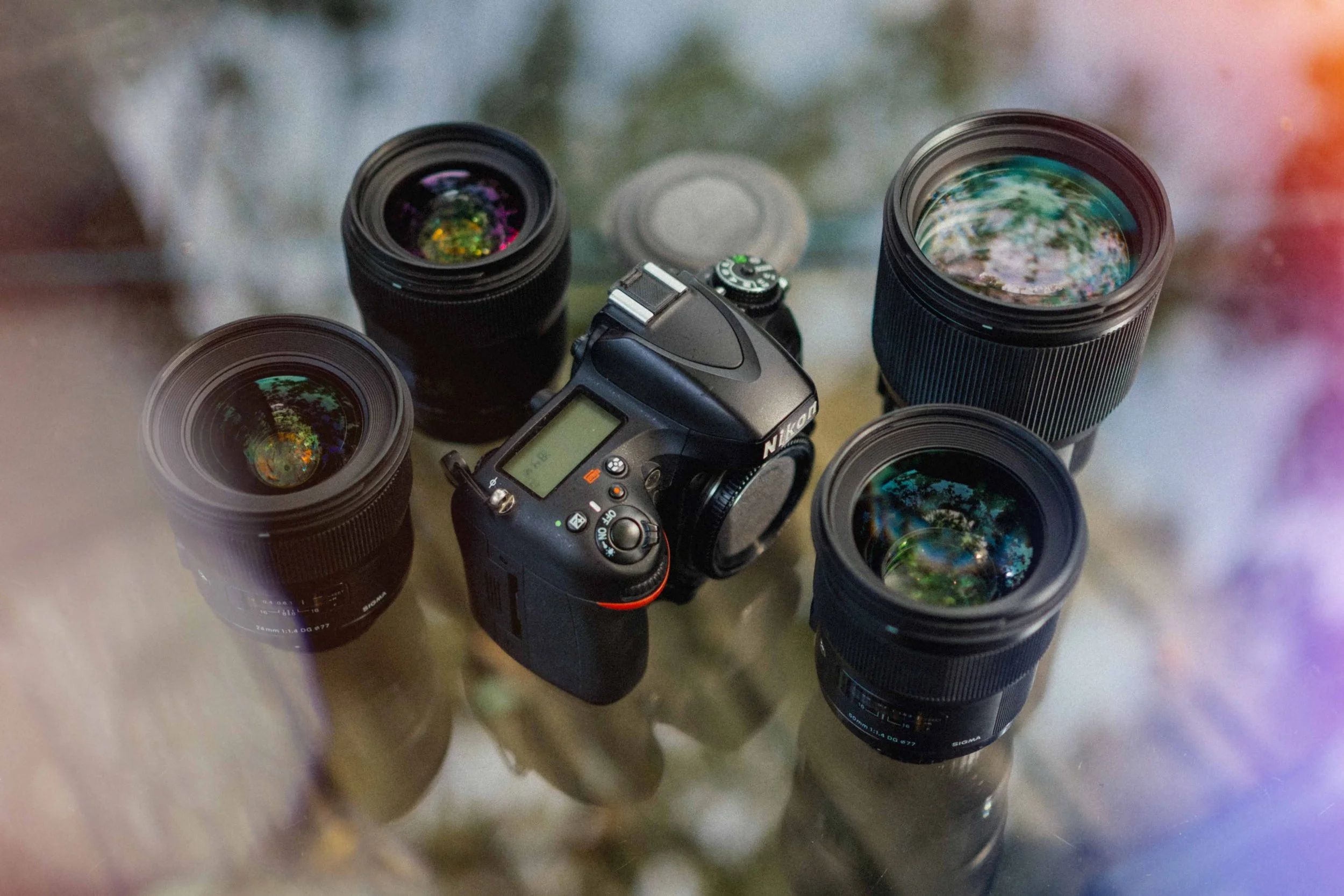
Seriously: look at the size of the front element on that 85mm lens!!
2 Pros of Fuji; 1 Con of Fuji
If you’ve read this far (bravo!), I hope you’re not taking out of this “Fuji = bad, Nikon = good.” It’s so much more nuanced than that. And it’s highly dependent on who you ask. I spent a professional career as a Nikon shooter. Of course there’s going to be stuff embedded in my DNA that is going to make it difficult to ever fully get away from it.
I want to offer up 2 reasons to stick with Fuji, and a reason I am (slowly and in ways) leaving Fuji. Rest assured that there are plenty more items I could add to both lists, but these are just the most pertinent to this particular conversation.
Pro: Fuji Film Simulations
Man, Fuji’s film simulations that are built into their cameras and customizable are awesome. They changed the way I shoot. I spoke about that Miami Beach / Cruise trip already and how it shaped the way I wanted to approach photography. That much remains true. It’s a mile-marker on my photographic journey that will never cease to exist.
When shooting Nikon, I always found it to stick very closely to what the camera sensor’s raw readout gave me. I built my business on the editing style of vivid colours and natural light. I didn’t like overly skewed and selectively-coloured photo edits (there were many trends in my day as a wedding photographer!). I always aimed for straight-down-the-line, and that served me and my clients very well. I still think it helps my photographs age better than some.
But when you look at the film simulations that Fuji gives you (borrowed from their extensive history as a photographic film manufacturer), you get closer to a more stylized look in a much shorter timespan. Can you shoot raw and achieve the same look in post-production? Almost certainly! But it’s not the exact same: that much I am willing to concede.
I spent years shooting Fuji’s Velvia preset. It served me very well. Somewhere along the way, I switched to a more Nostalgic Negative base preset (with colours boosted). That’s been where I’ve ended up for the most part.
If you don’t want to edit your photos — if that part of the process is thoroughly uninteresting to you — then Fuji is absolutely the way to go and it isn’t even close. Look no other way. Fuji is what you want.
Con: Speed of Focus & Processing
Something even my darling wife noted when shooting the Fujis in a few bursts of our kids: the Fujis are slow.
The Fuji XH2S — if you’re unfamiliar — is one of Fuji’s flagship bodies. It was released shortly before my buying it, and 4 years later, it still is arguably the top APS-C Fuji you can buy. I’d expect the best of the best performance.
It’s just not quite there. Maybe because I’m shooting both JPEG + RAW that it’s struggling more, but I found, doing just a handful of portrait sessions for clients and friends over the years, the Fuji slowed me down considerably. It was quite painful. I wasn’t confident I captured every moment I was hoping for because my gear was lagging behind.
Are there ways to work around this? Of course! Did I explore all of them? Definitely not! But even the autofocus performance wasn’t great, despite tracking features. For single shots with face detect on, the Fujis did great in every day life. They missed a perfectly acceptable number of shots. But in a setting where there were actual client expectations on the line, I didn’t feel like I had a strong hammer-of-a-tool in my hand. It felt much more like a paintbrush.
Pro: Fuji’s Shooter Community
This one’s a little off the beaten path of what you’ll find photographers discuss about a camera manufacturer, but I argue its validity nonetheless.
Fuji shooters are passionate to shoot Fuji. They love sharing film simulation “recipes” with each other. They love talking about the particular set ups that work incredibly well for street photography and landscapes and portraiture (3 big ones I’m drawn to). They compliment each other’s work. They are many talented people.
That doesn’t exist with Nikon or Canon that I’m aware of. You get a lot more dudes nerding out over the spec sheets than you do nerding out over what they actually made with the camera. I hope to still tap into that part of the Fuji community as I slowly step away from it (as my primary system).
Becoming a Photographer Again
Did these Sigma lenses give me my “Photographer” identity back? In a manner of speaking, it might be fair to say that.
They’ve definitely made me excited about photography again. I now find myself itching to create a beautiful scene just so I can edit some photos. I’m enjoying going back through my archives and looking at photos I’ve taken from years and years ago. They still bring me joy ages later.

I have something like 350+ photo galleries from the past 14 years saved to the cloud. Each one of those galleries contains anywhere from 25 - 750 photos. And that’s just what I’ve determined is worth keeping in a collection. Nevermind all the cell phone photos we’ve got elsewhere, and all the photos I took in high school and college. There’s a lot to enjoy.
Never would I say I forfeited the photographer label, nor the identity, but there were times where it was more and less central to how I see myself today.
It’s a joy to be able to create. It’s a joy to have cameras and lenses I’m excited about shooting. It’s a privilege many don’t get.
“Downgrading” my camera equipment (for now) has felt like nothing but a huge upgrade. To be shooting these lenses again — these lenses that get my blood flowing, that get my creative gears turning — there’s nothing quite like it.
More than anything, I believe gear matters — and is worth pursuing — if it makes you want to make stuff. The terrible photograph you took is 100x better than the incredible photograph you didn’t take.
In my heart and soul, I am a documentarian. I don’t always understand why. But I’m going to keep taking photos and documenting it along the way (and sharing those photos on blogs like this) until I figure out why I’ve been so compelled to do so.
And then I’ll shoot some more.
Bonus: Camera Brands at a Glance
I wrote this for the article but it didn’t make the cut. Nonetheless, it’s fun and I thought I’d include it below anyways.
Photographers will sometimes talking about lenses and camera manufacturers as having certain characteristics; personalities almost. At a glance, here are a few of the stereotypes that have floated around for a decade or two:
Sony cameras are perfect but clinical. Great for video (used to be prone to overheating). Skin tones err green or pink. White balance straight-out-of-camera never seems perfect.
Canon cameras were the artist’s lens; akin to an Apple computer. Beautiful optics on their lenses. People loved that scroll wheel. A good camera for most people (also, for a time, by far the most popular make of camera).
Fujifilms were for hobbyists. Great Japanese-made cameras and gear but not something taken super seriously. Their film simulations on their cameras were awesome. Lots of passionate street photographers use them, but very uncommon in the wedding photography space.
Nikons were treated like the Windows PC of computers. The menus were thought of as more robotic than Canon. But anyone (like me) that used Nikons contended that they were just as good as Canon, if not better. If Canon was #1, Nikon was definitely considered #2. They were the Pepsi and Coca-Cola of cameras.